Biometric Sensor Data Reshaping Performance Forecasts in Snooker, Golf, and Rugby Wagering
Written by Parker Russell · Oct 23, 2026

Biometric Sensor Data Reshaping Performance Forecasts in Snooker, Golf, and Rugby Wagering
Biometric sensors now capture detailed measurements of cue stability in snooker, putting accuracy in golf, and tackle force distribution in rugby, feeding these metrics directly into predictive wagering models that adjust probabilities in real time. Researchers at sports technology labs have documented how accelerometers and gyroscopes attached to equipment or worn by athletes record micro-movements, pressure variations, and joint angles during practice and competition. These data streams integrate with historical performance records to refine forecasts used by analysts who build odds for upcoming matches and tournaments scheduled through late 2026.
Equipment manufacturers have incorporated inertial measurement units into snooker cues that log lateral deviations and rotational consistency on every shot, while golf putters carry similar devices that track face angle at impact along with stroke tempo. Rugby players wear vests fitted with force sensors that quantify shoulder drive and grip pressure during contact drills. Observers note that patterns emerging from these readings correlate with on-field outcomes, allowing models to assign weighted values to stability scores when calculating expected results for individual players or teams.
Data Integration Across Multiple Sports
Analysts combine sensor outputs from different disciplines into unified datasets because certain biomechanical traits appear transferable, such as steady hand control that benefits both snooker cueing and golf putting mechanics. Studies conducted by European research consortia have shown that athletes who maintain low variance in cue or club path during repetitive drills also demonstrate improved tackle completion rates when similar balance metrics are measured in rugby sessions. Predictive algorithms process these cross-sport indicators alongside environmental factors like venue conditions and scheduling density, updating probabilities for events set to occur in October 2026 and beyond.
Software platforms used by data providers now ingest live feeds from these sensors during training camps, converting raw numbers into performance indices that wagering operators reference when setting lines. One documented case involved a professional snooker player whose sensor profile revealed consistent elbow stability on long pots, a trait that later aligned with higher success rates in pressure situations during televised tournaments. Similar profiling applied to golfers has identified putting stroke repeatability as a predictor of scoring averages on specific course layouts, while rugby tackle sensors have flagged fatigue thresholds that influence breakdown efficiency in matches.
Model Refinement and Pattern Recognition
Machine learning systems trained on months of biometric records identify subtle shifts in sensor readings that precede changes in competitive output, such as a gradual increase in putting stroke variability that often precedes missed short putts. These systems apply the same logic to rugby contact data, where declining peak force output during repeated tackles signals reduced effectiveness in subsequent matches. Wagering models incorporate these signals as dynamic variables rather than static averages, producing more granular projections for markets that cover individual player contributions or team totals.
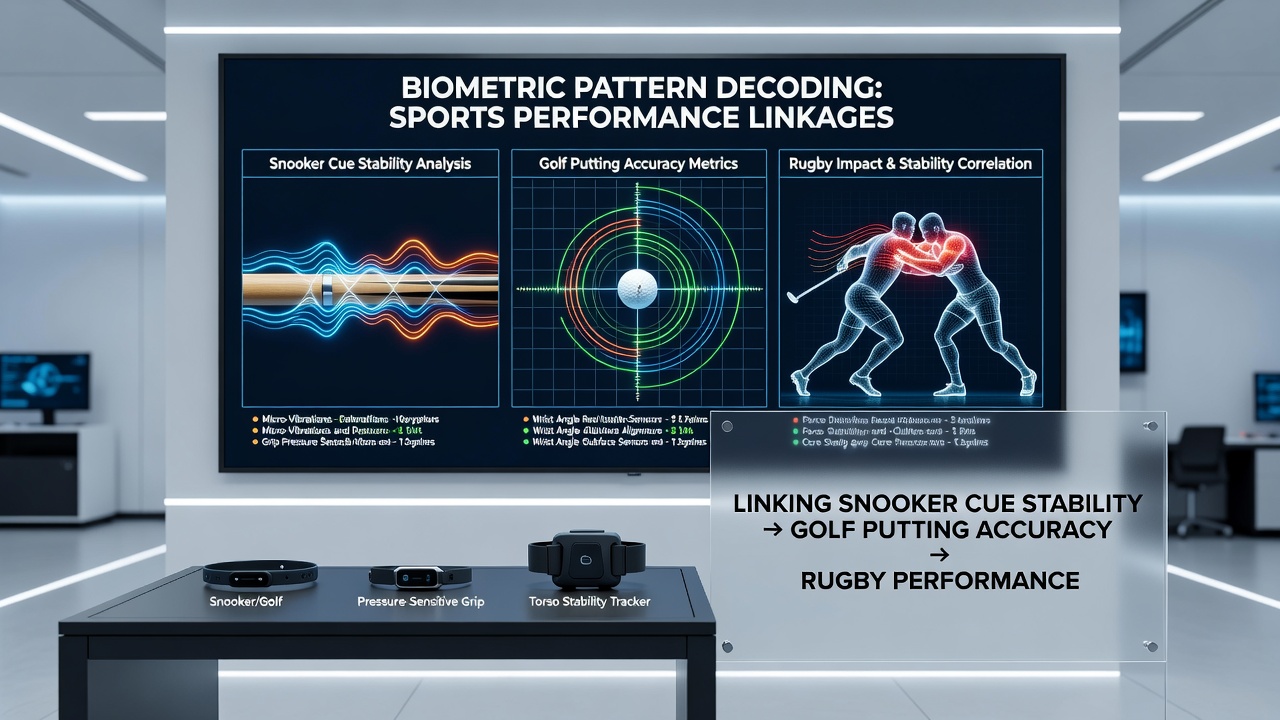
According to findings from Sports Science Australia, integration of multi-sport biometric datasets has improved forecast accuracy by measurable margins compared with models relying solely on traditional statistics. The same research indicates that sensor-derived stability scores for snooker and golf movements share statistical relationships with rugby tackle success when normalized for body mass and experience level. Analysts therefore treat these scores as supplementary inputs that help differentiate between closely matched competitors in tightly priced markets.
Practical Applications in October 2026 Events
With major snooker tournaments, golf majors, and rugby internationals clustered in the October 2026 calendar, teams responsible for odds compilation have accelerated adoption of sensor-enhanced modeling techniques. Real-time data pipelines allow continuous recalibration of probabilities as athletes complete final preparation sessions, capturing any deviations from established biomechanical baselines. Those who monitor these feeds report that even minor fluctuations in putting tempo or tackle drive consistency can shift implied probabilities enough to influence market movements before events begin.
Industry reports compiled by the International Code Council on emerging sports technology standards highlight the growing use of standardized sensor protocols across disciplines, which facilitates the cross-referencing of data points between snooker, golf, and rugby. This standardization supports the construction of composite indices that predictive systems apply when generating pre-event and in-play forecasts for combined or multi-sport wagering products.
Conclusion
Biometric sensor patterns continue to supply granular inputs that link cue stability, putting accuracy, and tackle success across the three sports, enabling wagering models to incorporate objective biomechanical evidence alongside conventional performance metrics. As data collection expands through the remainder of 2026, the resulting forecasts reflect increasingly precise representations of athlete readiness and consistency under competitive conditions.