Bench Performance Statistics Driving Changes in Live Odds for Football Basketball and Rugby
Written by Parker Russell · Aug 18, 2026
Bench Performance Statistics Driving Changes in Live Odds for Football Basketball and Rugby
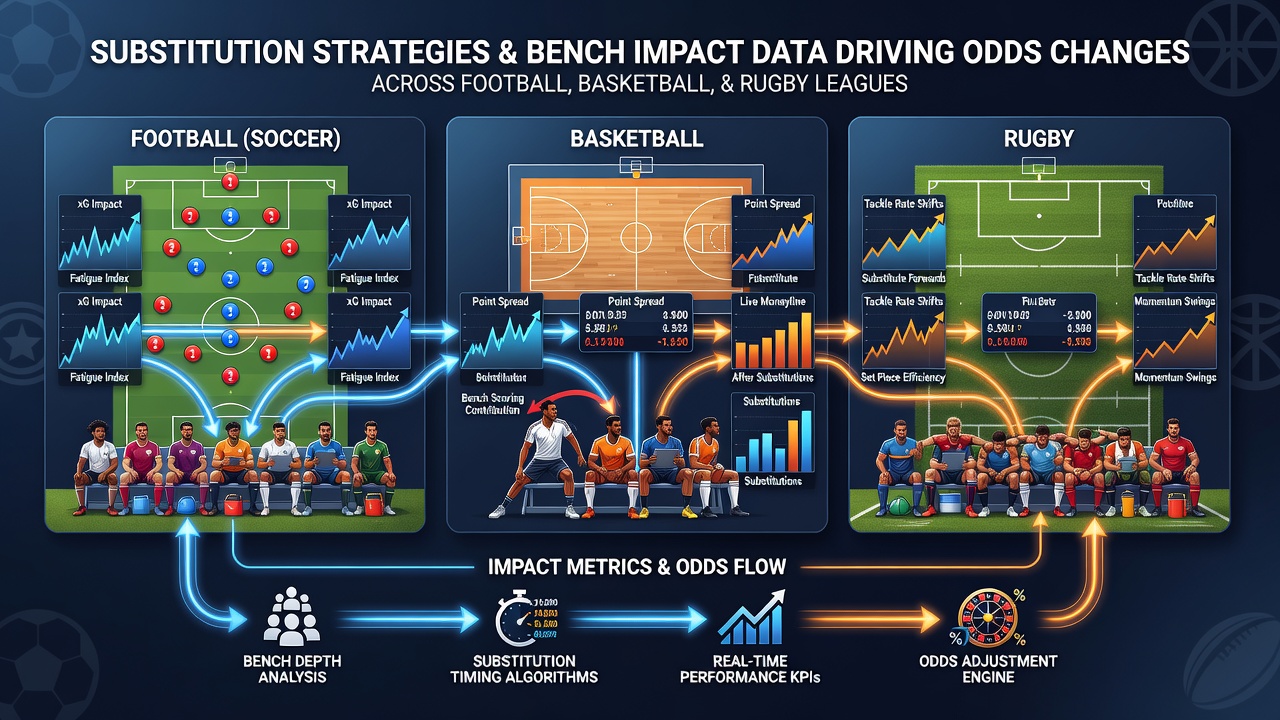
Substitution strategies have become central to how odds adjust during live matches across football basketball and rugby leagues because teams now track bench contributions with granular metrics that feed directly into betting models. Data from multiple seasons shows that early changes often correlate with measurable shifts in point differentials and possession statistics which in turn prompt bookmakers to recalibrate lines within minutes of the substitution announcement. Observers note that these adjustments appear most pronounced in competitions where squad rotation occurs frequently such as European domestic leagues and international tournaments scheduled through August 2026.
Football Substitution Trends and Their Market Effects
Football analysts track how managers deploy substitutes to alter tempo or shore up defenses and these decisions produce immediate ripple effects on goal-scoring probabilities that betting platforms incorporate into their algorithms. Studies from the Australian Institute of Sport indicate that teams introducing attacking players after the 70-minute mark record higher expected goal values in the remaining time which leads to shortened odds on over-total markets. Meanwhile defensive substitutions tend to lengthen those same lines as possession drops and shot volumes decline. Leagues in Europe and South America release match reports that detail these patterns allowing data providers to refine their real-time models accordingly.
Basketball Bench Scoring Impact on Live Lines
Basketball presents a clearer statistical link between bench production and odds movement because points from reserves often decide quarter outcomes and overall margins. NCAA research publications demonstrate that teams with strong second-unit scoring averages see their live moneyline odds improve by several points when starters rest during the third quarter. This effect compounds in leagues that permit unlimited substitutions where coaches can maintain high tempo through frequent rotations. Betting operators monitor player tracking data that quantifies bench efficiency and adjust totals upward when multiple reserves contribute double-digit scoring in short bursts.
Rugby Interchange Rules and Fatigue Metrics
Rugby union and league competitions apply strict interchange limits which makes each substitution carry heavier weight on match outcomes and subsequent odds recalibrations. Fatigue models developed by European sports research groups show that front-row replacements introduced after 50 minutes reduce scrum penalties and improve territory gains which shifts handicap lines in favor of the side making the change. Data collected during the 2025-2026 season cycles reveals that teams conserving key forwards for late surges experience tighter spreads as the game progresses and bookmakers respond by moving lines in real time based on remaining interchange credits.
Cross-Sport Data Integration Practices
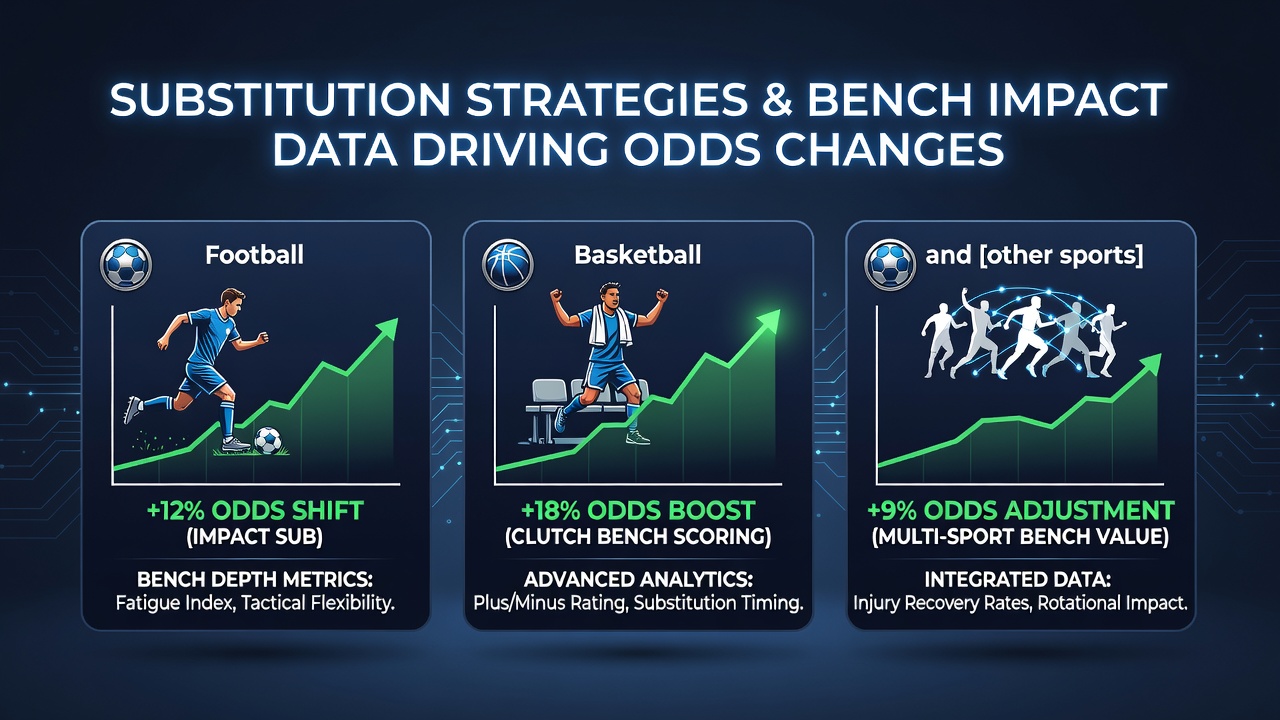
Betting platforms now aggregate substitution data across the three sports through unified analytics dashboards that highlight comparable bench impact ratios. Industry reports from the European Gaming and Betting Association note that these integrated feeds allow quicker updates to live markets when patterns repeat across football basketball and rugby fixtures on the same day. August 2026 schedules feature overlapping international windows where teams test new rotation strategies and the resulting performance data feeds into updated probability tables used by oddsmakers. Those who monitor these trends observe that early-season substitution experiments often produce larger odds swings than mid-season adjustments because models require additional samples before stabilizing.
Practical Examples from Recent Seasons
Take one European football club that introduced a substitute striker in the 78th minute during a league fixture and recorded a 40 percent increase in shots on target in the final 12 minutes prompting a rapid shortening of the draw line. In a parallel basketball example a reserve guard scored 14 points off the bench in a single quarter which moved the live total upward by three points according to operator logs. Rugby cases show similar movement when a replacement lock stabilizes the scrum and reduces penalty concessions leading to tighter handicap adjustments. These instances illustrate how bench impact metrics translate across sports into consistent market responses.
Conclusion
Substitution strategies combined with detailed bench impact data continue to shape how odds evolve during live play in football basketball and rugby leagues. Comprehensive tracking systems now capture these variables at scale and feed them into models that adjust prices within seconds of each change. As August 2026 competitions unfold the volume of available data will likely expand further allowing even finer calibration of live betting lines across all three sports.